AI engineerBandar Lengeh, Iran

From raw signals
to working systems.

I’m Mahmoud Naseri. I build Persian language tools, retrieval systems, and research prototypes. My work connects model experiments to the software around them.

Applied engineering. Controlled experiments. Honest results.

Inside the workChoose a starting point
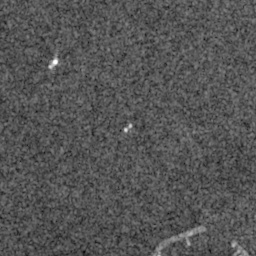
Sentinel-1 radar crop showing bright returns near Kish
Read the signalSentinel-1 radar
Run the detectorONNX on CPU
Inspect the resultPersian map console

Actual radar crop; schematic overlays. Modified Copernicus Sentinel data.

Radar imagery becomes a detection pipeline and a map for inspection.

Explore Khalij Watch
Selected work

Built, tested, questioned.

Six projects across applied AI and research. Open a case study for the problem, the implementation, and what the evidence supports.

6 case studies

SystemsThesis demonstrator

Khalij Watch

Reading the Gulf through radar

A maritime research demonstrator combining Sentinel-1 radar vessel detection, AIS fusion, and a Persian map console, with CPU inference and explicit evaluation boundaries.

  • PyTorch
  • Sentinel-1 SAR
  • ONNX
  • FastAPI
  • React
  • MapLibre
Read case study: Khalij Watch

The problem

Finding maritime objects in radar imagery requires separating vessel-like returns from coastal clutter, then evaluating detections against a clearly defined reference rather than treating every bright return as a ship.

What I built

Built a dense point detector with an EfficientNet encoder, a satellite-processing and AIS-fusion pipeline, ONNX inference, and a Persian map interface for inspecting results.

What the evidence shows

Same-cell GFW-reference agreement reached F1 0.817 versus CFAR 0.808 on 92 Sentinel-1A test area-passes. The project retains comparison results and false-positive examples.

Scope and limitations

These scores measure agreement with the GFW reference, not independently verified ship accuracy. The model does not infer vessel type, identity, length, or heading. This is a research demonstrator.

Source code is not currently public.

Radar crop: contains modified Copernicus Sentinel data. Evaluation reference: Global Fishing Watch. The decorative rings in the workbench are schematic overlays, not detection labels.

ResearchCompleted investigation

MQR-LM

A smaller head. A harder comparison.

A controlled investigation of multi-query vocabulary heads for language models, with matched baselines, numerical evidence, and a negative result that changed the direction of the work.

  • Python
  • PyTorch
  • Language modeling
  • Faiss
  • Experimental design
Read case study: MQR-LM

The problem

Narrower vocabulary tables reduce output-head storage, but can lose predictive capacity. The experiment asked whether multiple learned queries and an intermediate concept pathway could recover that capacity.

What I built

Implemented dense, direct-projection, and multi-query heads. Matched training exposure and decoder initialization, checked exact vocabulary probabilities, and separated learning comparisons from approximate CPU serving experiments.

What the evidence shows

Completed 15 training runs across five arms, three seeds, and four languages. Improved initialization helped MQR, but the simpler Direct4 control retained better validation likelihood. Code, result exports, and a paper draft are public.

Scope and limitations

The conclusion applies to the tested concept pathway and bounded development setting. Training convergence, broader downstream performance, and production serving were not established. The paper is an unpublished research draft.

Explore MQR-LM on GitHub
LanguageImplemented tool

Persian Subtitle Agent

Persian subtitles, with room for human judgment

A video-to-Persian-subtitle workflow combining vocal isolation, speech recognition, LLM proofreading, editable text review, and correctly shaped right-to-left subtitles rendered into video.

  • LangGraph
  • Whisper
  • Demucs
  • FastAPI
  • Hazm
  • FFmpeg
Read case study: Persian Subtitle Agent

The problem

Persian transcription can confuse foreign names and homophones, while background music introduces unwanted speech. A useful subtitle workflow also needs readable Persian rendering and a practical place for human corrections.

What I built

Connected vocal isolation, transcription, proofreading, normalization, and subtitle validation. Split the workflow at an editable SRT file, then converted the reviewed text into Persian-aware ASS subtitles for video rendering.

What the evidence shows

The public implementation includes a review interface, upload and progress APIs, configurable transcription backends, subtitle helpers, and offline tests. Human edits flow into the final rendering stage.

Scope and limitations

Designed as a local tool with paid inference dependencies. No standardized transcription-accuracy benchmark or universal review-time guarantee is claimed. Human review remains part of the workflow.

Explore Persian Subtitle Agent on GitHub
SystemsLocal validation

Peydash پیداش

Help return the item. Keep people private.

A Persian-first lost-and-found application with native Android reporting, durable offline drafts, moderated discovery, finder-led ownership claims, private conversations, and an agreed handover workflow.

  • Kotlin
  • Jetpack Compose
  • FastAPI
  • PostGIS
  • Redis
  • Room
Read case study: Peydash · پیداش

The problem

Lost-and-found software must handle uncertain connectivity and sensitive information without turning visual similarity into an ownership verdict or exposing private reports to unrelated people.

What I built

Built account-scoped Android drafts and backend workflows for moderation, discovery, claims, ephemeral private answers, messaging, and handover. The finder makes the ownership decision; images cannot decide who receives an item.

What the evidence shows

Documented local checks cover backend behavior, Android state, privacy boundaries, and synthetic multi-profile claim-to-closure journeys. The native client and backend are implemented; production validation remains unfinished.

Scope and limitations

Not a production release or measured recovery service. Real SMS delivery, signing, physical-device accessibility, verified handover venues, and a consented pilot still require external evidence.

Source code is not currently public.

SystemsEvaluated prototype

Self-RAG

Retrieve, answer, then check the evidence

A retrieval system that combines Neo4j vector and lexical search with relevance grading, cited answers, grounding checks, and bounded regeneration through a LangGraph workflow.

  • LangGraph
  • Neo4j
  • BGE-M3
  • FastAPI
  • OpenRouter
Read case study: Self-RAG

The problem

Retrieving a relevant passage does not ensure a supported answer. The system needs to distinguish missing evidence, failed grounding, and an answer that does not address the question.

What I built

Implemented hybrid retrieval, optional knowledge-graph expansion, structured grading nodes, explicit failure paths, and a bounded regeneration loop. Added evaluation scripts and query-level token, timing, and cost telemetry.

What the evidence shows

Hybrid retrieval recorded 93.0% Recall@5 on 43 answerable evaluation questions. The public report also records grounding checks, retrieval variants, and end-to-end outcomes, including cases where graph expansion did not improve answers.

Scope and limitations

Evaluation sets are small, and end-to-end judging uses the pipeline's own model. Grounding checks can miss unsupported claims or reject valid inferences. Reported retrieval recall is not general answer accuracy.

Explore Self-RAG on GitHub
LanguageBenchmark prototype

Persian Sentiment PEFT

Adapting a Persian model to customer reviews

A Persian sentiment project connecting ParsBERT LoRA adaptation, normalized review data, prompting baselines, experiment notebooks, and a FastAPI inference service.

  • PyTorch
  • Transformers
  • PEFT
  • ParsBERT
  • Hazm
  • FastAPI
Read case study: Persian Sentiment PEFT

The problem

Persian customer-review classification offers a concrete way to examine model adaptation alongside general-purpose prompting, while connecting the resulting classifier to an application interface.

What I built

Implemented Persian text preprocessing, LoRA adaptation of ParsBERT, zero-shot and few-shot prompting scripts, weighted-F1 evaluation, and an API for running the adapted classifier.

What the evidence shows

The public repository contains training and evaluation code, experiment notebooks, deployment files, and a link to the trained adapter. Its reported results motivate further matched evaluation.

Scope and limitations

The prompting script samples the test set while the adapter evaluator loads the full test split. Their reported scores should not be presented as a matched comparison or a universal advantage for fine-tuning.

Explore Persian Sentiment PEFT on GitHub
Further work

Applications, experiments, and open questions.

A broader view of my work, with the current scope of each project made explicit.

Structured LLM OutputSmall-scale reproduction

Reimplemented structured-output metrics and iterative prompt optimization, comparing formatting strategies across small-model endpoints. Reports model substitutions, reduced evaluation scope, and endpoint failures alongside the findings.

View repository

English Teaching InstitutionImplemented application

A Django English-learning application connecting AI writing assessment, placement tests, class enrollment, teacher workflows, exams, payments, and conversation-partner matching.

View repository

Authority-Conditioned PrecedencePre-registered · not yet run

An experimental plan and code for studying authority framing and instruction precedence across model post-training stages. No study data has been collected and no results are claimed.

View repository

Token Optimization MCPArchived prototype

Explored small, fresh language-server-backed code slices, repository maps, token budgets, and a session ledger to avoid repeatedly sending the same code context to coding agents.

Source not public

Slide CaptureArchived prototype

A self-hosted lecture-to-slide-PDF prototype using perceptual hashes and directional pixel changes to distinguish slide builds from new slides. Browser capture, OCR, and authenticated-source support remained roadmap work.

Source not public

MCP AuditResearch prototype

Explored malicious tool metadata with pattern detection, schema-breadth checks, and a cached LLM-judge workflow. An early development ablation found that combining detectors worsened performance; held-out results remain unestablished.

Source not public
Browse all public repositories
A little about me

Curiosity, with an
engineering habit.

I’m an AI engineer with a B.Sc. in Computer Engineering from Shahid Bahonar University of Kerman. My work spans Persian NLP, computer vision, and language-model evaluation.

I like following a problem through the whole system: data, model, evaluation, interface, and the places where it can fail. A useful result can be a working tool, a better experiment, or a clear reason to change direction.

Currently based in Bandar Lengeh, Iran.

Tools I work with

Models and evaluation

  • Python
  • PyTorch
  • Transformers
  • PEFT / LoRA
  • scikit-learn
  • ONNX

Retrieval and language workflows

  • LangGraph
  • Neo4j
  • FAISS
  • Whisper
  • Hazm
  • FFmpeg

Applications and infrastructure

  • FastAPI
  • Django
  • PostgreSQL / PostGIS
  • Redis
  • Docker
  • React / TypeScript
  • Kotlin / Compose